


Starting a Project Expect Bumps Stay Persistent and Find Solutions
Every project begins with a picture in your head. The finished room. The working app. The repaired bike. The small business idea finally moving. The first draft, first sketch, first plan, or first step can feel exciting because the path looks clear from the starting line.
Then reality shows up.
A tool breaks. A cost is higher than expected. A timeline slips. The first version looks rough. Someone gives feedback that stings. You realize you skipped a step, misunderstood a requirement, or took on more than you planned.
That does not mean the project is failing. It means the project has become real.
Most worthwhile work includes confusion, delays, mistakes, and course corrections. The people who finish are not the ones who avoid every problem. They are the ones who learn to pause, solve, adjust, and keep going.
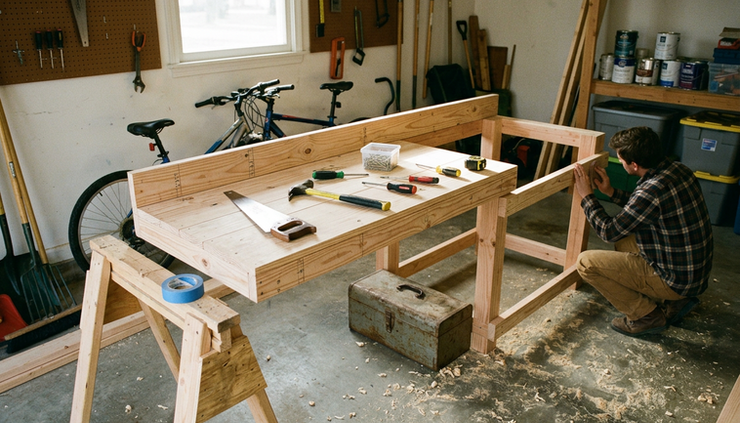
Bumps do not mean you chose the wrong path
When a project starts getting messy, it is easy to take the problem personally. A delayed step can feel like proof that you are not skilled enough. A mistake can feel like a sign that you should stop. A confusing moment can make the whole idea seem too big.
In most cases, the bump is only information.
It may be telling you:
The plan needs more detail
The timeline was too optimistic
A tool, skill, or resource is missing
The project has a hidden step
The first approach was not the best one
You need help from someone with experience
None of those mean the project is impossible. They mean the project is asking for a new decision.
Think about learning to cook a new recipe. The first try may take longer than expected. You may realize you chopped something too large, used too much heat, or missed a prep step. That does not mean you should never cook again. It means you now know what to do differently next time.
Project work is the same. A mistake is often a guide, not a verdict.
The danger is not the bump itself. The danger is the story you attach to it. If the story becomes “I always mess things up,” progress stops. If the story becomes “This part needs a better solution,” progress continues.
Start with a flexible plan, not a perfect one
A plan matters. It gives you direction, helps you estimate time, and makes the work less overwhelming. Still, a plan should not become a cage.
Many people wait too long because they want a perfect plan before they begin. They try to predict every issue, every cost, every decision, and every possible outcome. That can feel responsible, but it often turns into fear wearing a responsible mask.
A better plan gives you enough structure to start and enough flexibility to adjust.
A useful starter plan includes:
A clear goal
A few major milestones
The first three actions
A rough timeline
A list of known risks
A place to track questions and changes
That is enough to begin. You do not need to know everything. You need to know the next honest step.
For example, if you are fixing up a room, your first plan might include measuring the space, choosing a paint color, pricing materials, and setting aside a weekend for prep. You may later find damaged trim, uneven walls, or a color that looks different in natural light. That is normal. The plan gave you motion. The updates make the plan stronger.
A flexible plan also protects your energy. When something changes, you do not have to throw everything away. You can adjust the next step and keep moving.

Break the problem down before you react
When something goes wrong, the first reaction is often frustration. That reaction is human. Give it a moment, but do not let it run the project.
Before you quit, complain, or start over, break the issue into smaller parts. A problem that feels huge may be made of two or three simple pieces.
Ask these questions:
What exactly is not working?
When did the problem start?
What changed right before it happened?
What have I already tried?
What is the smallest test I can run next?
Who might know more about this than I do?
This turns panic into investigation.
If you are building something and two pieces do not fit, “This whole project is ruined” is too broad. A better question is, “Which piece is off, the cut, the measurement, or the assembly order?” Once you know that, the solution becomes easier to find.
Here is a simple way to think through common project bumps.
Common bump | What it often means | What to do next |
You are behind schedule | The estimate was too tight or a step was missed | Reset the timeline and protect the next priority |
The result looks rough | You are seeing an early version, not the finished product | Improve one visible detail at a time |
Costs are rising | Materials, tools, or outside help were underestimated | Separate must-haves from nice-to-haves |
You feel stuck | The next step is unclear or too large | Make the next action smaller |
Feedback feels discouraging | The work is visible enough to improve | Pull out the useful part and ignore the harsh tone |
This kind of thinking is simple, but it works. It puts you back in a position of choice.
A bump in the road is not a stop sign. It is a signal to slow down, look closer, and choose the next move with care.
Persistence works best when it is practical
Persistence does not mean pushing blindly. It does not mean ignoring problems, refusing feedback, or working until you burn out. Real persistence is steady and practical.
It sounds like this:
“I need a better method.”
“I will try one more test.”
“I can ask for help.”
“I will take a break and come back with a clearer head.”
“This part is hard, but hard does not mean impossible.”
That mindset matters because most projects have an emotional middle. The beginning has energy. The end has reward. The middle has repetition, doubt, and details that take longer than expected.
The middle is where many people stop.
To stay with the work, build habits that support persistence before you need them.
Keep proof of progress
When progress feels slow, your brain may focus only on what remains unfinished. Keep visible proof that the project is moving.
Take photos. Save drafts. Check off small tasks. Keep a short project log with dates and notes. Write down what you solved, even if it seems minor.
A simple note like “figured out the right drill bit” or “finished the first rough draft” can help on a harder day. Progress becomes easier to believe when you can see it.
Set a recovery rule
Every project needs recovery time. That could mean stepping away for an hour, sleeping on a decision, or taking one day off before returning to the problem.
A recovery rule keeps breaks from turning into quitting. For example:
If I feel frustrated, I will pause for 30 minutes before making a major decision.
If I get stuck, I will write down the problem and one possible next step.
If I miss a work session, I will restart with a 15-minute task the next day.
This creates a path back.
Ask for help early enough
Asking for help is not weakness. It is often the shortest route to a solution. Someone else may spot the issue in minutes because they have seen it before.
Help can come from a friend, mentor, tutorial, forum, class, book, or local expert. The key is to ask a clear question.
Instead of “I do not know what I am doing,” try:
“This part does not line up. What should I check first?”
“My budget is getting tight. What can I simplify?”
“I have three possible next steps. Which one would you test first?”
Clear questions get better answers.

Solutions often appear after you stop forcing the first idea
One reason people get discouraged is that they fall in love with the first plan. When that plan stops working, they think the goal has failed.
The goal and the method are different.
Your goal may be to build a shelf, launch a service, finish a painting, organize a family event, or learn a new skill. The method is simply how you planned to get there. If the method fails, try another method.
Maybe you need a simpler version. Maybe you need better materials. Maybe the order of steps needs to change. Maybe the project needs to be smaller for now.
This is not lowering your standards. It is learning from reality.
A first version should teach you something. If it does, it has value, even when it is not good enough to be final.
Think in versions:
Version one teaches what is possible
Version two fixes the most obvious problems
Version three starts to feel solid
Later versions add polish
This removes some pressure. The first attempt no longer has to carry the whole project. It only has to show you what to learn next.
Discouragement is part of the process, but it should not lead
Discouragement shows up when effort and results do not match. You work hard, but the outcome still looks unfinished. You spend time, but the project feels stuck. You fix one issue, and another appears.
That feeling is real. Respect it, but do not hand it the steering wheel.
When discouragement hits, try this short reset:
Name the problem in one sentence.
Name one thing that is still working.
Name one next action that takes less than 20 minutes.
Do that action before judging the whole project again.
This keeps the project alive.
For example:
Problem The first draft is messy.
Still working The main idea is strong.
Next action Rewrite only the opening paragraph.
That is much easier than “fix the whole thing.”
Small action breaks discouragement because it gives your mind new evidence. You are no longer stuck in the feeling. You are back in motion.

Redefine success while you keep moving
Success is easy to define at the end. The thing is done, working, shipped, shared, fixed, built, or learned. During the project, success needs a different definition.
Some days, success is solving one small issue. Some days, it is making the uncomfortable phone call. Some days, it is admitting the plan needs to change. Some days, it is choosing not to quit.
That still counts.
A strong project mindset includes patience and honesty. Patience keeps you from giving up too soon. Honesty keeps you from pretending everything is fine when a change is needed. Together, they help you finish with less stress and more pride.
When you hit the next bump, take it step by step:
Pause before reacting
Look at the facts
Break the problem into pieces
Ask for help if needed
Try a smaller next action
Adjust the plan
Keep going
The project may not unfold the way you imagined. Most projects do not. But a rough road can still lead somewhere worthwhile.
Start before everything feels perfect. Expect problems without fearing them. Stay persistent, stay flexible, and keep looking for solutions. A bump is not the end of the road. It is part of the work that teaches you how to finish.


Comments